

ข้อเสนอจัดสัมมนาเรื่องการทดสอบการสั่นสะเทือนแบบอิสระ (Free Vibration Testing) ที่เมืองพัทยา ประเทศไทย
บริษัท สยามอินเตอร์คอร์ป (ประเทศไทย) จำกัด และ อัลตร้า เอ็นจิเนียริ่ง – พันธมิตรของเราในประเทศไทย – ร่วมกับ ดาต้า ฟิสิกส์ส์ คอร์ปอเรชั่น กำลังพิจารณาจัดหลักสูตรฝึกอบรมการทดสอบการสั่นสะเทือนด้วยเครื่องเขย่า (Vibration Shaker) ฟรี 1 วัน ในวันที่ 17 หรือ 24 กันยายน 2569
ในขั้นตอนนี้ เป็นเพียงการแสดงความสนใจ (EOI) เท่านั้น
สถานที่: พัทยา ประเทศไทย
สถานที่จัดงาน: จะแจ้งให้ทราบภายหลัง
ค่าใช้จ่าย: ฟรี (มีอาหารกลางวันให้)
Siam Intercorp and Ultra Engineering – our partners in Thailand – in collaboration with Data Physics – are considering hosting a FREE 1-day vibration shaker training course on either 17 or 24 September 2026.
At this stage, this is an Expression of Interest (EOI) only.
- Location: Pattaya, Thailand
- Venue: To be confirmed
- Cost: Free (lunch provided)
If this free training would be of interest to you or your team, please submit the short form below which will assist us in confirming venue, format, and final arrangements.
หากท่านหรือทีมงานสนใจเข้าร่วมการฝึกอบรมฟรีนี้ โปรดกรอกแบบฟอร์มสั้นๆ ตามลิงก์ด้านล่าง ซึ่งจะช่วยเราในการยืนยันสถานที่ รูปแบบ และการเตรียมการขั้นสุดท้าย
ลงทะเบียนแสดงความสนใจ
Register Your Interest
กำหนดการ
หลักสูตรการฝึกอบรมที่นำเสนอนี้จะครอบคลุมเนื้อหาตั้งแต่พื้นฐานไปจนถึงแนวคิดขั้นสูงเกี่ยวกับการควบคุมระบบสั่นสะเทือนแบบหลายตัวขับเคลื่อน (Multi-actuator Control) โดยมีโครงสร้างเนื้อหาดังนี้:
ช่วงเช้า
แนะนำบริษัท The NVT Group
พื้นฐานและหลักการสำคัญของการสั่นสะเทือน
แนะนำการใช้งานซอฟต์แวร์ SignalCalc 900
ช่วงบ่าย
พื้นฐานการควบคุมการสั่นสะเทือนด้วยเครื่องเขย่า (Shaker) แบบชุดเดียว
(Sine / Random / Shock / Mixed Mode)
พื้นฐานการวิเคราะห์สัญญาณเชิงพลวัต (Dynamic Signal Analysis)
การทดสอบการสั่นสะเทือนด้วยเครื่องเขย่าหลายชุด (Multi-Shaker)
การประยุกต์ใช้งานและกรณีศึกษาด้านการทดสอบการสั่นสะเทือน
Agenda
The proposed training will cover fundamentals through to advanced multi-actuator control concepts, structured as follows:
Morning Session
- Introduction to The NVT Group
- Vibration Basics and Fundamentals
- Introduction to SignalCalc 900 Software
Afternoon Session
- Single Shaker Vibration Control Fundamentals
(Sine / Random / Shock / Mixed Mode) - Dynamic Signal Analysis Fundamentals
- Multi-Shaker Vibration Testing
- Vibration Testing Applications and Case Studies
ใครควรเข้าร่วม?
หลักสูตรนี้เหมาะสำหรับ:
บุคลากรทุกคนที่เพิ่งเริ่มต้นเรียนรู้เกี่ยวกับการทดสอบการสั่นสะเทือน
ช่างเทคนิคการทดสอบและบุคลากรห้องปฏิบัติการ
วิศวกรพัฒนาผลิตภัณฑ์
วิศวกรคุณภาพและความน่าเชื่อถือ
ผู้จัดการโครงการและผู้จัดการทดสอบ
วิศวกรการผลิตและการตรวจสอบความถูกต้อง
ทุกคนที่ต้องการความเข้าใจเชิงปฏิบัติเกี่ยวกับการทดสอบการสั่นสะเทือนและการประยุกต์ใช้ในอุตสาหกรรม
Who Should Attend?
This course is suitable for:
- All personnel new to vibration testing
- Test technicians and laboratory personnel
- Product development engineers
- Quality and reliability engineers
- Project and test managers
- Manufacturing and validation engineers
- Anyone seeking a practical understanding of vibration testing and its industrial applications
ผู้เข้าร่วมจะดำเนินการทดสอบโดยใช้การจัดวางชุดเครื่องเขย่าหลายเครื่องในรูปแบบต่างๆ ดังนี้: แบบ Push-push ในแนวนอน, แบบ Push-push ในแนวตั้ง และแบบ Push-pull ในแนวนอน
Participants will run tests in the following multi-shaker configurations: Push-push horizontal, push-push vertical, and push-pull horizontal.
ภาพรวม
วัตถุประสงค์ของการฝึกอบรม
ผู้เรียนจะได้เรียนรู้วิธีการตั้งค่าและใช้งานระบบทดสอบการสั่นสะเทือนแบบเดี่ยวและแบบหลายตัวเขย่าอย่างมีประสิทธิภาพ
ภาพรวมหลักสูตร
หลักสูตรนี้เป็นการแนะนำอย่างครอบคลุมเกี่ยวกับหลักการทดสอบการสั่นสะเทือน อุปกรณ์ และการใช้งานในอุตสาหกรรม ผู้เข้าร่วมจะได้เข้าใจว่าเหตุใดจึงต้องทำการทดสอบการสั่นสะเทือน ระบบทดสอบการสั่นสะเทือนทำงานอย่างไร และการทดสอบการสั่นสะเทือนถูกนำมาใช้เพื่อปรับปรุงความน่าเชื่อถือ ความทนทาน และคุณภาพของผลิตภัณฑ์ในอุตสาหกรรมต่างๆ อย่างไร
หลักสูตรนี้ผสมผสานทฤษฎีพื้นฐานเข้ากับการสาธิตเชิงปฏิบัติ ทำให้ผู้เข้าร่วมสามารถพัฒนาความรู้ที่จำเป็นในการเข้าร่วมกิจกรรมการทดสอบการสั่นสะเทือนได้อย่างมั่นใจ
วัตถุประสงค์การฝึกอบรม
ผู้เข้าร่วมจะได้เรียนรู้:
พื้นฐานของการสั่นสะเทือนและผลกระทบต่อผลิตภัณฑ์และโครงสร้าง
แนวคิดและศัพท์เฉพาะพื้นฐานของการทดสอบการสั่นสะเทือน
ประเภทของการทดสอบการสั่นสะเทือน ได้แก่ ไซน์ สุ่ม ช็อก และการค้นหาเรโซแนนซ์
ส่วนประกอบของระบบทดสอบการสั่นสะเทือนและหน้าที่ของส่วนประกอบเหล่านั้น
ข้อควรพิจารณาในการตั้งค่าการทดสอบและพื้นฐานของเครื่องมือวัด
การตีความข้อมูลการทดสอบการสั่นสะเทือนและการวัดทั่วไป
มาตรฐานอุตสาหกรรมและข้อกำหนดการทดสอบ
ความท้าทายทั่วไปและแนวปฏิบัติที่ดีที่สุดในการทดสอบการสั่นสะเทือน
Overview
Training Objectives
Students will learn how to effectively set up and use single and multi shaker vibration test systems.
Course Overview
This course provides a comprehensive introduction to vibration testing principles, equipment, and industry applications. Participants will gain an understanding of why vibration testing is performed, how vibration test systems operate, and how vibration testing is used to improve product reliability, durability, and quality across various industries.
The course combines fundamental theory with practical demonstrations, allowing attendees to develop the knowledge needed to confidently participate in vibration testing activities.
Training Objectives
Participants will learn:
- Fundamentals of vibration and its effects on products and structures
- Basic vibration testing concepts and terminology
- Types of vibration tests, including sine, random, shock, and resonance search
- Components of a vibration test system and their functions
- Test setup considerations and instrumentation basics
- Interpretation of vibration test data and common measurements
- Industry standards and test specifications
- Common challenges and best practices in vibration testing
Syllabus
Single and Multi-Shaker Vibration Testing Seminar
DAY 1
Fundamentals
Signal Processing Fundamentals
- Digitization
- Dynamic Range
- Time vs. Frequency
- Frequency Response Functions
Vibration Fundamentals
- Rigid body dynamics
- Spring/Mass/Damper
- Non-Rigid Body dynamics, Modes
- Degrees of freedom
Single Shaker Control
- Frequency Response Function
- Pretest Reports
- Control Schemes
- Sine/Random/Shock/Replicator
- Effect of Modes on a test
Q&A Session
DAY 2
Advanced / MIMO Signal
- MIMO Frequency Response Function
- Spectral Density Matricies
MIMO Vibration Fundamentals
- Degrees of freedom overview
- Rigid body degrees of freedom
- Bearings
- Reaction mass
- Existing Multi-axis test setups
- Modal degrees of freedom
- Kinematic transformation
- Control Accelerometers, Rank
- Placement of shakers
MIMO and Multi-Actuator Control
- Frequency response matrix
- Control Degrees of Freedom
- Control matrix inversion
- Control Schemes and GUI setup: Sine/Random/Shock/Replicator/Mixed Mode
- Pretest Reports
- Effect of Modes
- Modeshape Cancellation
Q&A Session
ผู้สอน
การฝึกอบรมดำเนินการโดยผู้เชี่ยวชาญที่มีประสบการณ์มากมายในด้านการควบคุมการสั่นสะเทือน การวิเคราะห์สัญญาณ และการทดสอบด้านสิ่งแวดล้อม การบรรยายจะนำเสนออย่างชัดเจนและเป็นรูปธรรม โดยผสมผสานความรู้ทางทฤษฎีเข้ากับประสบการณ์จริงในอุตสาหกรรม
โดยทั่วไปแล้ว การสัมมนาเหล่านี้จะมีผู้เข้าร่วม 20 ถึง 30 คน ทำให้เกิดสภาพแวดล้อมการเรียนรู้แบบโต้ตอบที่ส่งเสริมการอภิปราย การแบ่งปันความรู้ และการมีส่วนร่วมระหว่างผู้เข้าร่วมและผู้สอน ผู้เข้าร่วมได้รับการสนับสนุนให้ตั้งคำถามเฉพาะด้านและอภิปรายเกี่ยวกับความท้าทายในการทดสอบการสั่นสะเทือนที่เกี่ยวข้องกับอุตสาหกรรมของตน
Instructors
Training is delivered by experienced professionals with extensive backgrounds in vibration control, signal analysis, and environmental testing. Lectures are presented in a clear and practical manner, combining theoretical knowledge with real-world industry experience.
These seminars are typically conducted with 20 to 30 participants, creating an interactive learning environment that encourages discussion, knowledge sharing, and engagement between attendees and instructors. Participants are encouraged to raise application-specific questions and discuss vibration testing challenges relevant to their industries.
การฝึกปฏิบัติและการสาธิตการใช้งานจริง
เราตระหนักดีว่าการเรียนรู้ผ่านตัวอย่างจริงเป็นสิ่งสำคัญสำหรับผู้เรียน หลักสูตรนี้จึงเน้นการสาธิตการใช้งานจริงเป็นหัวใจสำคัญ โดยจะมีการสาธิตรูปแบบการติดตั้งและตั้งค่าระบบ Shaker (shaker configurations) ในลักษณะต่างๆ พร้อมทั้งอธิบายรายละเอียดเกี่ยวกับรูปแบบที่นิยมใช้กันทั่วไป ในแต่ละรูปแบบจะมีการประเมินทางเทคนิคและคำแนะนำอย่างละเอียดเกี่ยวกับวิธีการตั้งค่าตัวควบคุม (controller) ให้ถูกต้องเหมาะสม
การสาธิตตลอดหลักสูตรจะมุ่งเน้นไปที่ประเด็นปัญหาเฉพาะด้านที่อาจเกิดขึ้นในการใช้งานจริง ช่วยให้ผู้เรียนได้เรียนรู้วิธีแก้ไขปัญหาที่มักพบเจอในการปฏิบัติงานภาคสนาม
Hands-On Training and Demonstrations
We understand that students learn by example, which is why live demonstrations are critical to the course. Live demonstrations illustrating various shaker configurations will be presented during the course, and common configurations will be discussed in detail. Each configuration will include a technical assessment, as well as a detailed instruction on how to properly configure the controller for that configuration.
Demonstrations used throughout the classes highlight specific application issues. Students learn how to solve real-world problems that are often encountered while working in the field.
Get Data Physics News and Product Updates
Join our mailing list.
Critical Insights for Safe and Accurate Multi Shaker Vibration Testing
In this in-depth video, we reveal the multiple, inherent engineering challenges that are typical with multi shaker single axis testing and offer proven solutions to help you overcome them.
You’ll gain insights into the complexities of multi-shaker vibration testing and how to avoid costly mistakes by employing a properly configured vibration control system.
Key Benefits of Multi Shaker Single-Axis Vibration Testing
Overview
The demand for the testing of very large test articles is increasing. Typically, this requirement is met with very large electrodynamic shakers (approximately 45 klbf to 60 klbf). Shakers of this size are limited in frequency range, and some tests require more force than is available with a single shaker.
Multi-shaker single-axis testing enables testing that combines the force of multiple shakers to produce the higher force required. It also adds the flexibility of separating the shakers for individual tests of smaller test articles when higher force levels are not required — and without the reduction in frequency range associated with very large shakers.
This course will cover the fundamentals of vibration, signal processing and multi-shaker testing with a focus on multi-shaker single-axis testing.
Also included: How to avoid shaker damage when conducting multi shaker testing.
The course will include demonstrations and hands-on training with multiple shakers in single-axis push-push and push-pull configurations.
Location Details
Texas A&M University
Zachry Engineering Education Complex
125 Spence St College Station
On-Campus Parking
Polo Road Garage, Polo Road College Station
Validation provided.
Area Lodging
TEXAS A&M HOTEL AND CONFERENCE CENTER
177 Joe Routt Blvd, College Station, TX 77840
THE GEORGE
180 Century Ct, College Station, TX 77840
THE STELLA HOTEL
4100 Lake Atlas Dr, Bryan, TX 77807
HILTON COLLEGE STATION
801 University Dr E, College Station, TX 77840
EMBASSY SUITES
201 University Dr E, College Station, 77840
HYATT PLACE
1100 University Dr E, College Station, 77840
Included in Course 02:
Learn How to Avoid Shaker Damage
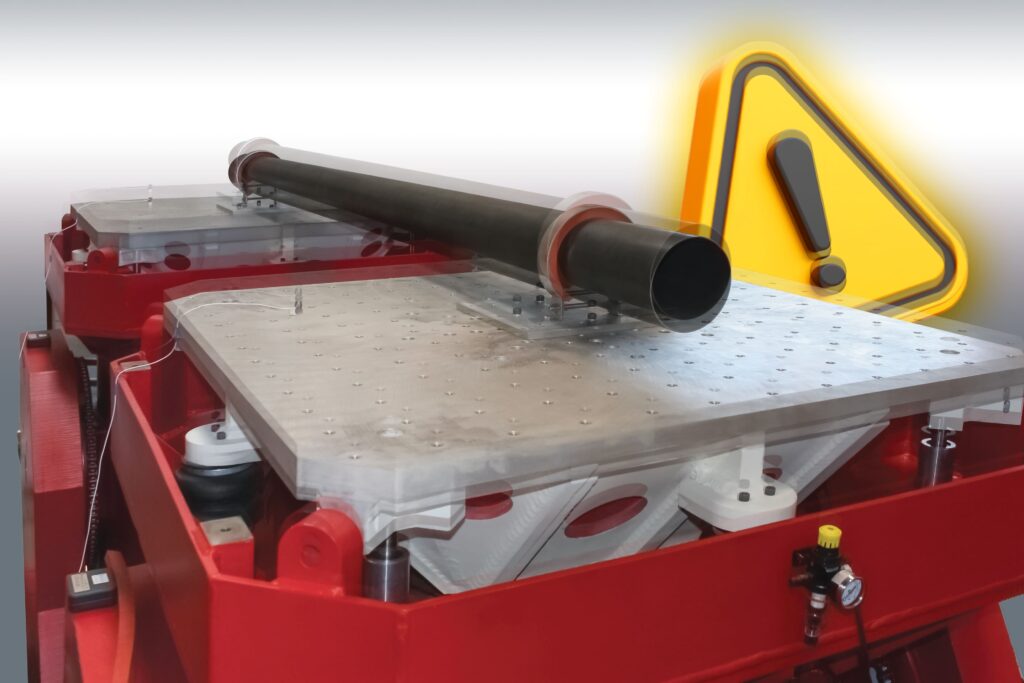
Running two shakers together to drive a single test table or test article is a common way to achieve a higher force capability. But when doing so, there is a serious risk of damaging your shakers or over-testing your test article – and the only way to ensure this doesn’t happen is to have the correct controller.
Many controllers will just split the drive signal to two shakers, use a “phase matching” piece of electronics, or use two separate control loops to try and coax two shakers to work well together. This not only gets suboptimal results – it is risky.
When driving two shakers in such a way, the controller has no way to know if the shakers are fighting each other. The two shakers can be outputting forces that cancel each other out – and there will be no detectable acceleration response. This is an easy way to overdrive your shakers and exert extreme stress through the test article or table.
To help you avoid these costly mistakes, the 900 Series vibration controller employs a MIMO control algorithm which has the appropriate settings to ensure the shakers don’t fight each other. It measures and uses the exact amplitude and phase response of each shaker – and when generating the drive for each shaker it ensures that they don’t generate opposing forces. This allows for correct control – and more importantly, the safest execution of a dual shaker test.
Read more about these important multi shaker testing safety considerations.
Future NVT University Courses Include:
Impedance Matched Multi-Axis Vibration Testing (IMMAT)
Impedance Matched Multi-Axis Testing is a new method to reproduce a structure’s response to real-world vibration environments. In IMMAT testing, measured data and the test article’s mode shapes are used to determine the excitation required at specific locations to reproduce the measured response in the laboratory.
This course will cover the process of using measured vibration and mode shape data to perform an IMMAT test. The course will include demonstrations and hands-on training with multiple shakers exciting a test article at discrete locations.
Multi-Degree of Freedom (MDoF) featuring the Team Corporation Tensor™ 6DoF Electrodynamic Shaker
Products do not experience vibration a single axis at a time in the real world. Simultaneous multi-degree of freedom vibration testing can speed up testing and reproduce failures that cannot be reproduced by sequential single-axis testing.
Multi-degree of freedom testing is currently in use in a variety of military, aerospace and automotive applications.
This course will cover the fundamentals of vibration, signal processing and multi-degree of freedom vibration testing with a focus on six degree of freedom testing. The course will include demonstrations and will have a focus on hands-on training with a Team Corporation Tensor 6-DoF electrodynamic shaker system and a Data Physics MIMO vibration controller.
Vibration Testing Using Electrodynamic Shakers
This course will cover the fundamentals of vibration, signal processing and single shaker vibration testing. It will also cover the operation and maintenance of electrodynamic shakers. The course will include demonstrations and will have a focus on hands-on training with electrodynamic shakers.