
Aerospace Vibration Testing
From the very first satellite tests to the heaviest rockets and most valuable payloads, Data Physics’ signal analysis and vibration testing systems have helped to advance the most ambitious programs around the world.
The same advanced features developed for groundbreaking aerospace vibration testing programs are available for your vibration testing initiatives – like advanced MIMO control, soft shutdown, real-time test system health monitoring, and unmatched data accuracy, processing speed, and stability for high channel count testing.

Innovation + Experience. Inspiring Confidence.
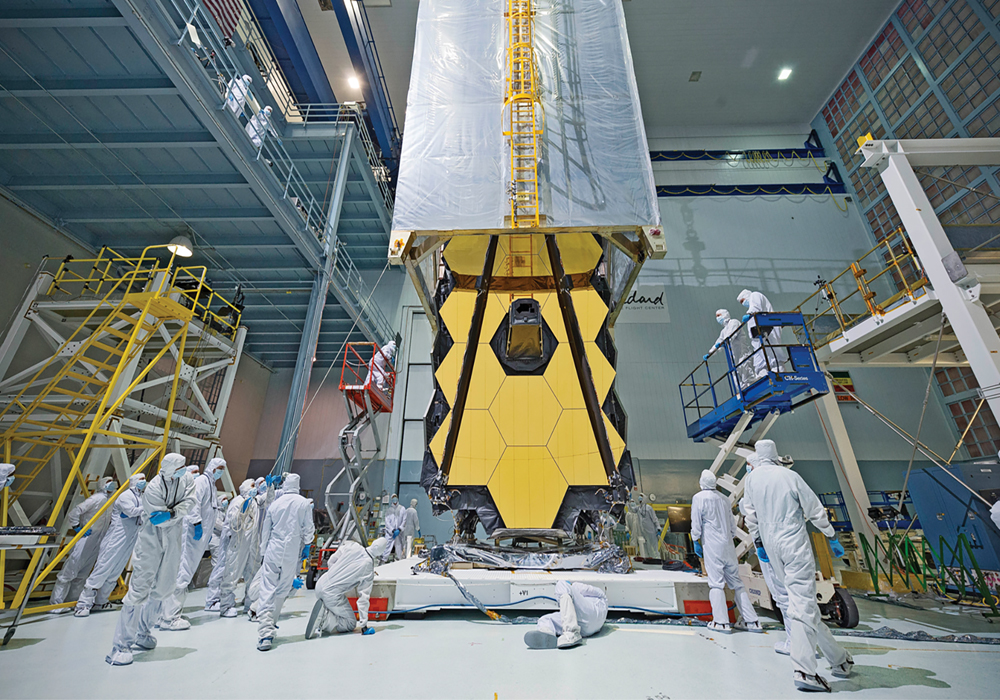
When NASA needed to conduct pre-launch vibration testing on the $9 billion James Webb Space Telescope, the safety of the delicate satellite was their top priority.
Data Physics and NVT Group partner company Team Corporation worked together to develop a “Soft Shutdown” system that not only monitors the satellite for over-testing, but also monitors the facility power and critical parts of the test system for indications of pending failure. If any problem is detected, the safe or “soft” shutdown is triggered faster than human reaction time, and the test is smoothly ramped down rather than abruptly shut off, avoiding any transients from being imparted into the test article.
The system can even handle a sudden loss of 480V facility power. The Data Physics controllers are at the center of the Soft Shutdown system. If the test PC crashes or network connection is lost, the controller automatically ramps the test down, and no data is lost. Once the connection is restored, you can resume the test where it was stopped.

Sierra Space Dream Chaser Testing
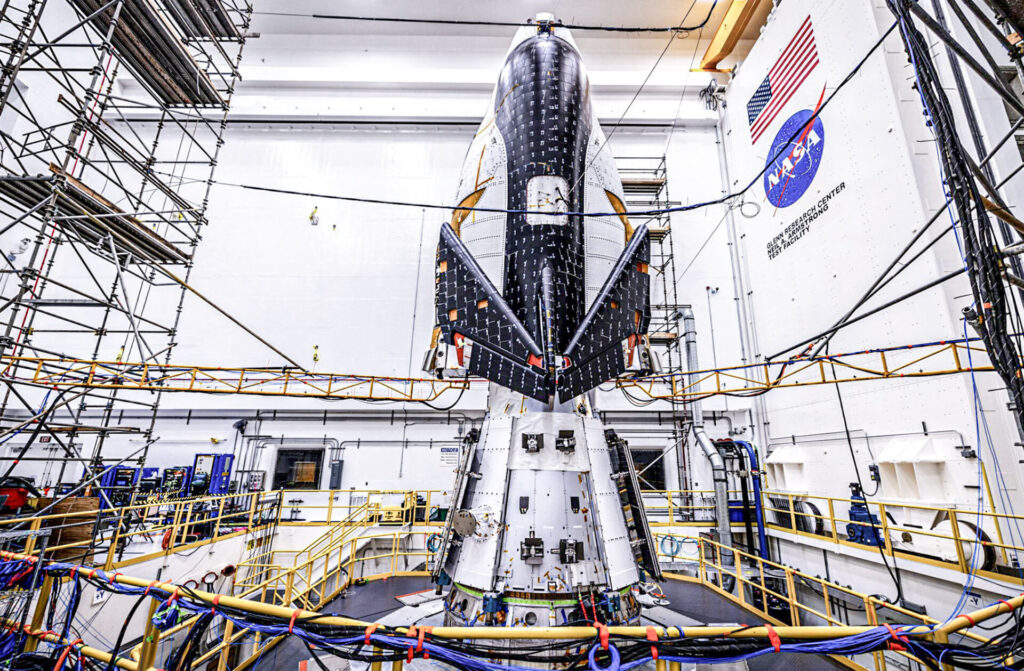
In 2024, the Sierra Space Dream Chaser was tested on the world’s largest six degree of freedom vibration table — the Mechanical Vibration Facility (MVF) — that was designed and built for NASA’s Armstrong Flight Research Center by Team Corporation and controlled by a Data Physics multi-shaker controller.
Sine tests were performed in each linear axis sequentially, with no need to reorient the spacecraft. Data Physics MIMO controller software was able to independently drive the four horizontal shakers and the sixteen vertical shakers in quadrants, allowing test engineers to minimize the off-axis motion and rotations.
That is no small feat during horizontal tests when test article CGs can be as tall as 23ft above the MVF, and off-axis shaker forces to counteract the moment exceed the in-axis shaker forces.
Data Physics produces the only controller that can drive the MVF with this level of fidelity, empowering aerospace engineers to dream bigger and reach further.
Applications of Vibration Testing for Aerospace and Aircraft
When NASA needed to conduct pre-launch vibration testing on the $9 billion James Webb Space Telescope, the safety of the delicate satellite was their top priority. Data Physics and NVT Group partner company Team Corporation worked together to develop a “Soft Shutdown” system that not only monitors the satellite for over-testing, but also monitors the facility power and critical parts of the test system for indications of pending failure. If any problem is detected, the safe or “soft” shutdown is triggered faster than human reaction time, and the test is smoothly ramped down rather than abruptly shut off, avoiding any transients from being imparted into the test article. The system can even handle a sudden loss of 480V facility power. The Data Physics controllers are at the center of the Soft Shutdown system. If the test PC crashes or network connection is lost, the controller automatically ramps the test down, and no data is lost. Once the connection is restored, you can resume the test where it was stopped.

In 2024, the Sierra Space Dream Chaser was tested on the world’s largest six degree of freedom vibration table — the Mechanical Vibration Facility (MVF) — that was designed and built for NASA’s Armstrong Flight Research Center by Team Corporation and controlled by a Data Physics multi-shaker controller. Sine tests were performed in each linear axis sequentially, with no need to reorient the spacecraft. Data Physics MIMO controller software was able to independently drive the four horizontal shakers and the sixteen vertical shakers in quadrants, allowing test engineers to minimize the off-axis motion and rotations. That is no small feat during horizontal tests when test article CGs can be as tall as 23ft above the MVF, and off-axis shaker forces to counteract the moment exceed the in-axis shaker forces. Data Physics produces the only controller that can drive the MVF with this level of fidelity, empowering aerospace engineers to dream bigger and reach further.
A Complete Satellite Qualification Safety System
Data Physics and NVT Group partner company Team Corporation have engineered a test safety system capable of protecting valuable test articles from unexpected events – even a complete loss of 480 V power.
The safety system includes modifications to all subsystems involved in the test – the shaker, amplifiers, hydraulic guidance, and vibration controller. In the case of any subsystem failure, the controller ramps down the test before any transients can be imparted to the test article.
Such a test system was used to test the James Webb Space Telescope at NASA Goddard in 2017.
Vibration Control for Satellite Qualification
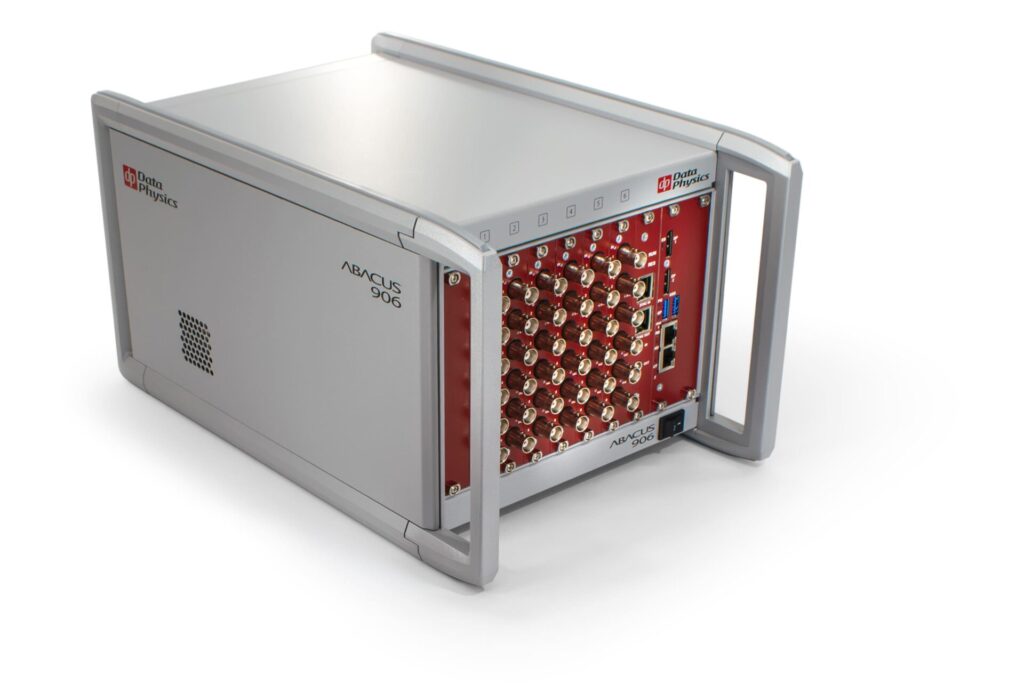
The 900 Series controller was designed with safety in mind. It uses a decentralized design is intrinsically safe from unexpected computer failures during a test.
The 900 Series has the ability to compute math channels for summed moments/forces, displacements, and more (gap-free). Math channels can be used as a part of the notching or control algorithms.
The 900 Series platform has unique features which eliminate the need for post processing data, eliminating the need for post processing and streamlining the tedious task of identifying issues with the vibration test.
Analysis System for Satellite Qualification
Monitor hundreds or thousands of measurement channels in during a shaker vibration test – with special features customized for satellite test monitoring.
Such features include the ability to define tolerance profiles for individual channels, monitor for transients, and to signal the controller to ramp down the test if any anomalies are detected.
Timing is critical – and SignalCalc 900 is optimized to quickly direct the controller to shut down when any irregularities are detected.

Guided Head Expanders
Overturning moments must be contained when exciting a large test article. Shaker armatures are not designed to handle large overturning moments, and external guidance bearings are often required to ensure overturning moments don’t damage the test system; and ultimately the device under test.
Data Physics and NVT Group partner company Team Corporation specializes in custom guidance bearings to constrain overturning moments that are generated during a vibration test.
Partner with Data Physics
With our dedicated team of engineers and partnership with Team Corporation, Data Physics is uniquely qualified to help you to take on complex aerospace vibration testing challenges confidently.
If you already use Data Physics controllers and analyzers, upgrading to the latest 900 series software can increase productivity in your lab with enhanced functionality and many new time-saving features. Current customers looking for training to get the most out of their analyzers, controllers, and software can connect with our applications engineers at the link below.
Data Physics offers installation, calibration, and on-site training for a wide range of industries to make your testing smooth and efficient. When challenges arise, our global team of support engineers are a phone call away and ready to help.
Features for Advanced Vibration Analysis
Data Physics is the industry leader in data accuracy and channel flexibility across high channel count data acquisition systems. Each Abacus 912 unit has up to 72 input channels, and multiple units can be linked together to get thousands of channels in a test. Even in such linked configurations, data integrity is maintained, and any 2 channels have a maximum phase error of just 0.025 degrees (at 2kHz). There are no limitations on sample rates and block sizes – and you can even record signals simultaneously at different sample rates; and automatically export time or frequency domain data while data acquisition is still ongoing. The accuracy and flexibility built into the SignalCalc software and Abacus hardware simplify complex aerospace and aircraft vibration test setups.
With multi-shaker control testing experience going back decades, it’s easy to see how Data Physics has the most advanced aerospace vibration testing controls and features. Data Physics controllers learn the combined control response from each shaker before the test begins.
Advanced notching in MIMO random and sine tests can notch just the drive signals that would contribute to an over-test, similar to notching in a single-shaker test.