How to Set Up and Run a Classical Shock Test
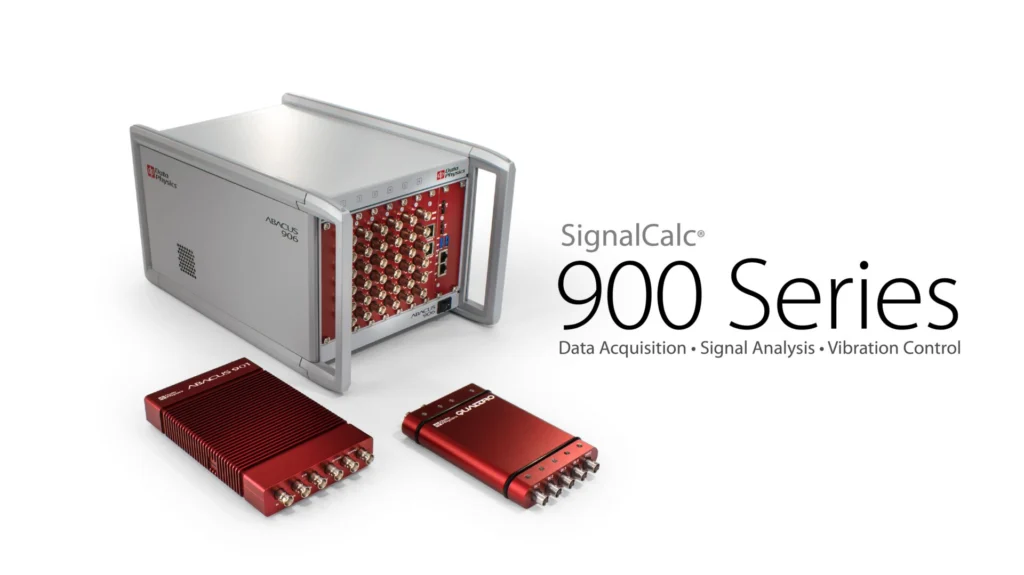
Data Physics is pleased to present this free webinar – specifically directed to those looking to expand their understanding of the features and functionality of the SignalCalc 900 Series Analyzer/Controller.
Webinar Agenda
- General tour of the software interface.
- How to set up a Classical Shock test.
- How to run a Classical Shock test.
A classical shock test is conducted to determine whether a product, component, or structure can withstand a short-duration, high-amplitude mechanical shock representative of its real-world environment.
Classical shock testing on a shaker is an efficient method to test products against high-acceleration transients, offering better accuracy and more repeatability than a drop shock machine.
The Classical Shock software offers a wide range of classical pulse types, including half sine, rectangular, triangular (symmetrical or non-symmetrical), sawtooth (initial or terminal peak), trapezoid, double sine, haversine, sineburst, and user-imported pulses.
Reasons to Conduct a Classical Shock Test
1 Verify product survivability
- Determine whether equipment can withstand the shock levels it may experience during transportation, handling, operation, deployment, or accidents.
- Identify physical damage, component failures, loose parts, cracked structures, or electrical malfunctions.
2 Validate a design
- Confirm that a new product or structural design meets specified shock requirements before production.
- Verify that design changes have not reduced shock resistance.
3 Simulate real-world shock environments
Classical shock testing can reproduce events such as:
- Dropping or impact
- Pyrotechnic events
- Vehicle crashes
- Stage or payload separation
- Launch and deployment events
- Weapon or munition environments
- Transportation and handling impacts
4 Identify structural weaknesses
Reveal resonances, mounting problems, fastener failures, structural weaknesses, and component vulnerabilities that may not appear during normal vibration testing.
5 Verify compliance with standards
Shock tests are commonly used to demonstrate compliance with customer, military, aerospace, automotive, transportation, and other industry requirements.
6 Establish design margins
Testing above the expected operational environment can help determine how much shock a product can tolerate before failure.
This provides valuable information for qualification and reliability assessments.
Benefit | What it provides |
Reliability | Confidence that the product will survive its intended environment |
Design validation | Physical evidence that the design meets shock requirements |
Failure identification | Finds weaknesses before field deployment |
Product improvement | Helps engineers strengthen structures, mounts, and components |
Qualification | Demonstrates compliance with applicable requirements |
Reduced field failures | Prevents costly failures after deployment |
Reduced development risk | Identifies problems early in the design cycle |
Repeatability | Provides a controlled, measurable shock environment |
Test correlation | Allows comparison between laboratory testing and real-world events |
Why Use a Classical Shock Pulse?
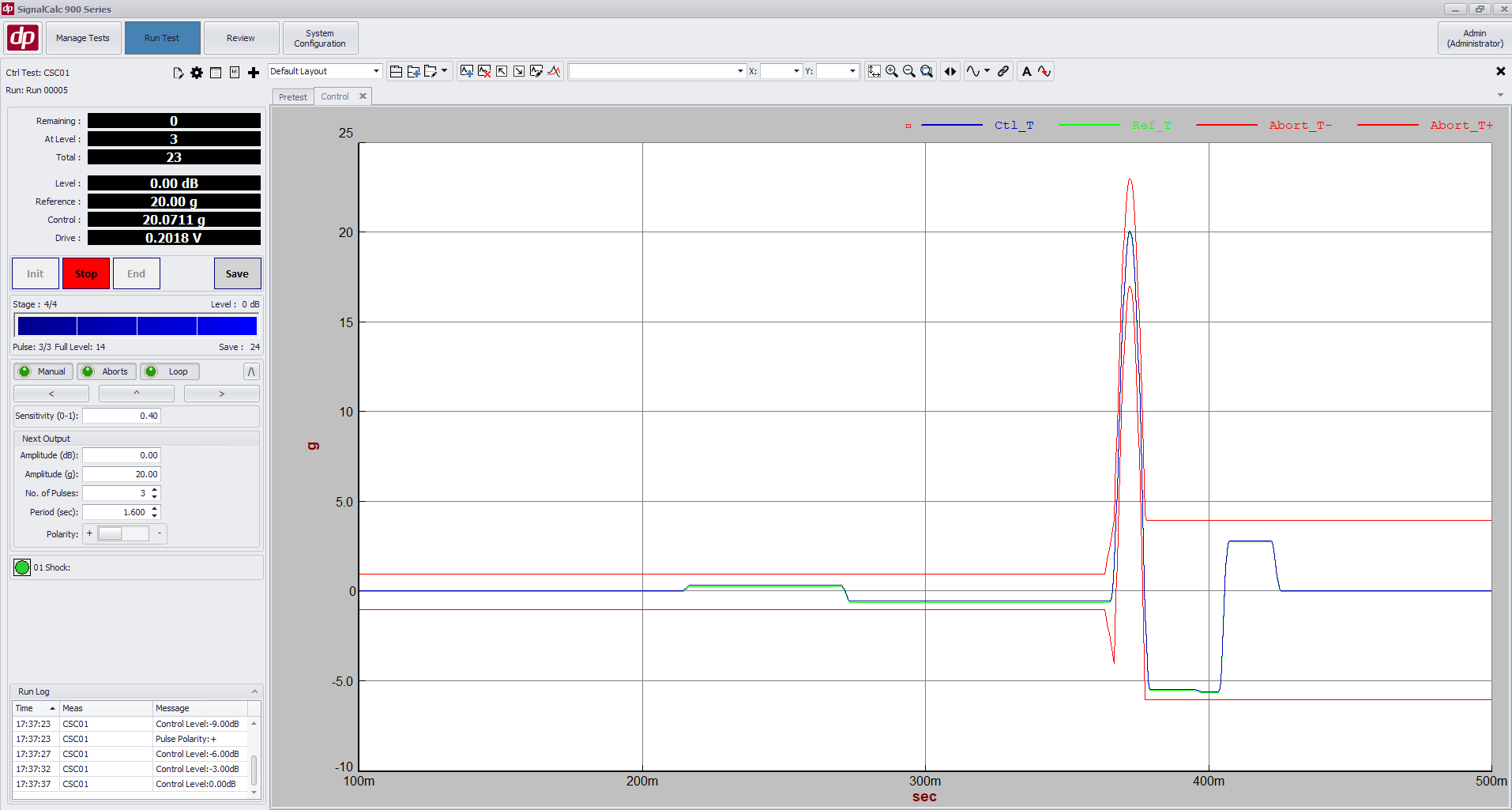
A classical shock test typically uses a defined acceleration-versus-time pulse, such as a half-sine, haversine, terminal-peak sawtooth, or trapezoidal pulse.
The advantage is that the test can precisely control parameters such as:
- Peak acceleration (G)
- Pulse duration
- Pulse shape
- Polarity
- Number of shocks
- Test direction
These parameters can be selected to approximate the expected field environment or to meet a specified test standard.
Classical Shock vs. Random Vibration
The two tests answer different questions:
Random vibration:
Can the product withstand sustained vibration over a range of frequencies?
Classical shock:
Can the product survive a short-duration, high-energy mechanical event?
A shock pulse can excite structural resonances very quickly, potentially producing large internal responses even when the input pulse itself is relatively brief. That’s why engineers often examine the resulting Shock Response Spectrum (SRS) in addition to the acceleration-time waveform.
The Bottom Line
The primary reason to conduct a classical shock test is to demonstrate that a product can survive the transient mechanical shocks it will encounter during its life—and to discover vulnerabilities before those shocks occur in the field.
About the Coffee Break Webinar Series:
A potent brew of “how-to” for vibration testing professionals.
How do I run a single-shaker sine test? How do I set up a modal shaker test? What about running a single shaker SRS test?
Inquiring minds want to know, so we’ve decided to host a new series of short, 5-to-10-minute webinar demos designed to provide answers to many of today’s common vibration testing questions.
Each demo is available in our video library.
Get the Classical Shock Data Sheet
SignalCalc Vibration Controllers Literature Access
Please submit your contact information for access to the complete SignalCalc Vibration Controllers literature library.
Thank you!
Try the SignalCalc 900 Series Software for Free
Explore the power of the SignalCalc 900 Series software – with no hardware required. Run simulated tests, review results, and generate reports exactly as you would in a live environment.
Data Acquisition • Signal Analysis • Vibration Control