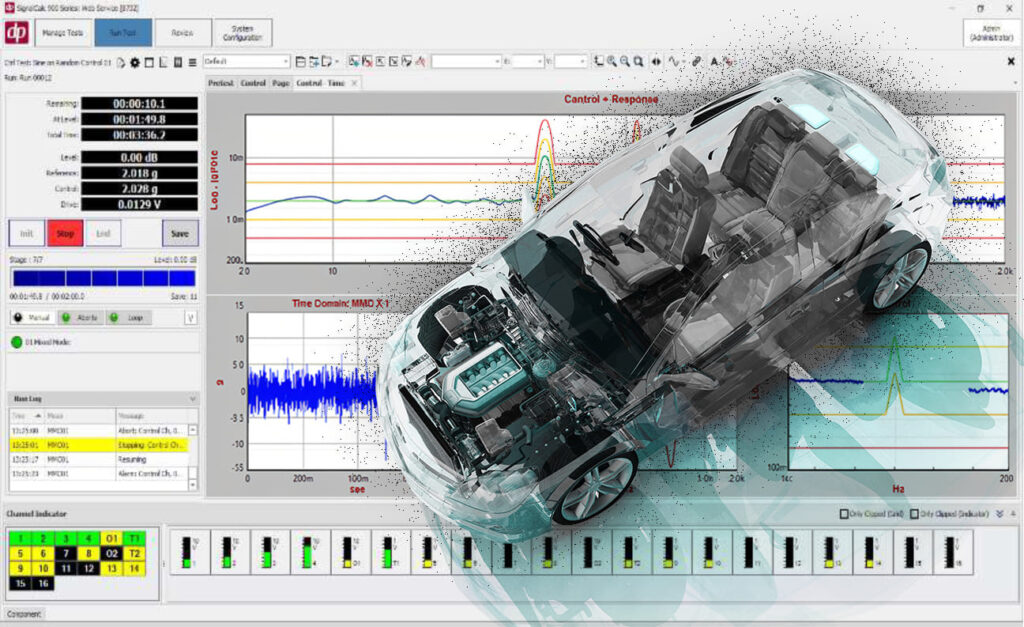
In the automotive industry, ensuring vehicle durability and passenger comfort requires comprehensive vibration testing. Real-world driving conditions subject vehicles to complex vibratory environments that combine different vibration modes. These scenarios are best represented through mixed mode vibration testing, which replicates simultaneous excitations in multiple directions and frequencies.
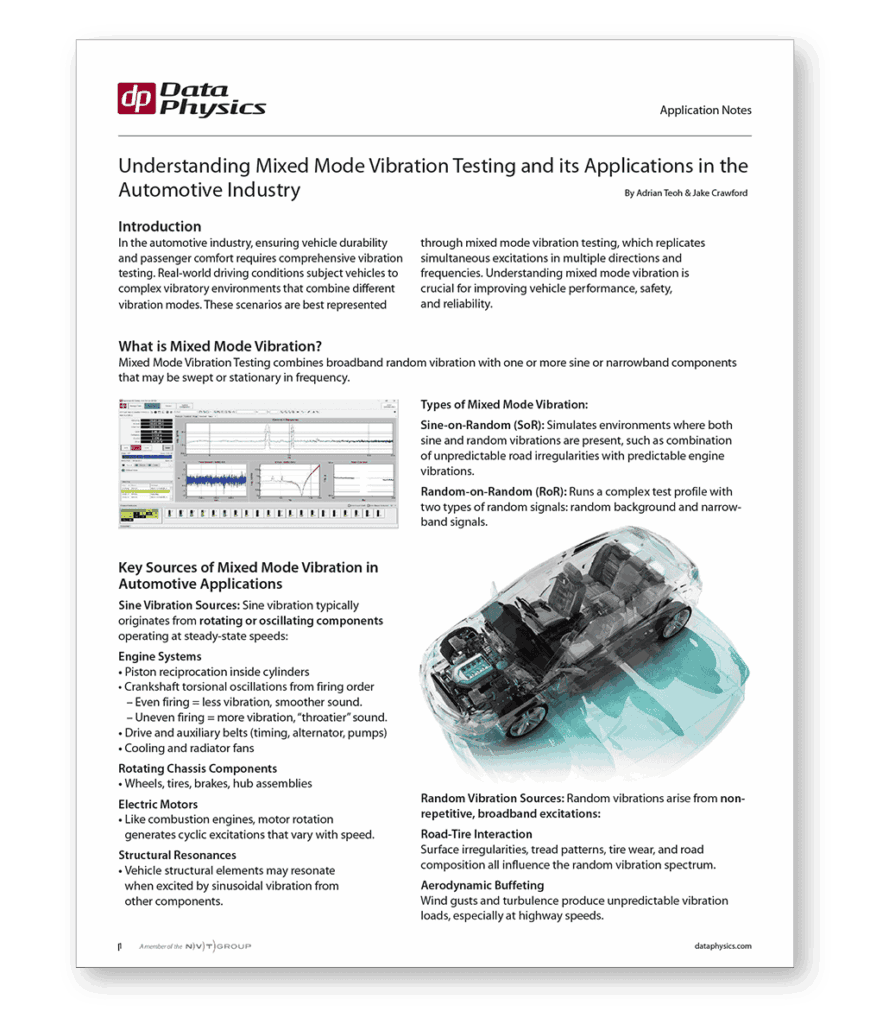
Download the Application Notes
“Understanding Mixed Mode Vibration Testing and its Applications in the Automotive Industry”
Understanding mixed mode vibration is crucial for improving vehicle performance, safety, and reliability.
Check out our application notes on this subject where we go into more detail:
• What is Mixed Mode Vibration? • Key Sources of Mixed Mode Vibration in Automotive • Applications for Mixed Mode Vibration Testing in Automotive Industries • Benefits of Mixed Mode Vibration Testing • Advantages of SignalCalc 900 for Mixed Mode Vibration Testing
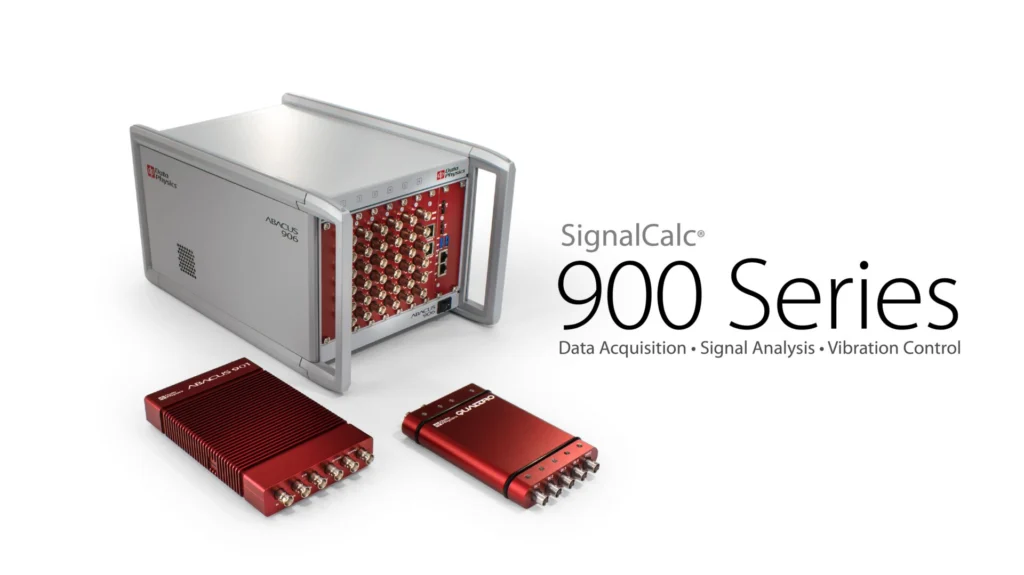
Explore the power of the SignalCalc 900 Series software – with no hardware required. Run simulated tests, review results, and generate reports exactly as you would in a live environment.
Data Acquisition • Signal Analysis • Vibration Control